What is Content Marketing? A Beginner’s Guide
What is Content Marketing?
Content marketing is a powerful marketing strategy that involves creating and distributing valuable, relevant, and consistent content to attract and retain a clearly defined audience. This article aims to provide a beginner’s guide to content marketing, including its definition, benefits, types, and best practices.
In today’s digital age, where consumers are constantly bombarded with ads and marketing messages, traditional advertising is becoming less effective. Consumers are looking for brands that provide value and build relationships with them. This is where content marketing comes in.
Definition of Content Marketing
Content marketing is the process of creating and sharing relevant, valuable, and engaging content to attract and retain a clearly defined audience, with the ultimate goal of driving profitable customer action. The content can take many forms, including blog posts, videos, podcasts, social media posts, infographics, e-books, and whitepapers.
Why is Content Marketing so important?
Consumers have become increasingly savvy and discerning in their purchasing decisions. Traditional advertising and marketing tactics no longer sway them but seek information and resources to help them make informed decisions. Content marketing allows your business to provide valuable, informative, and engaging content to your target audience. This is a big part of building trust and credibility, and helps to establish your brand as a part of the industry. Many consumers base whether or not they are going to do business with a brand on how trustworthy and credible they seem, so if your brand doesn’t seem credible, consumers are highly likely to do business elsewhere.
Content Marketing ROI – What Does it Cost?
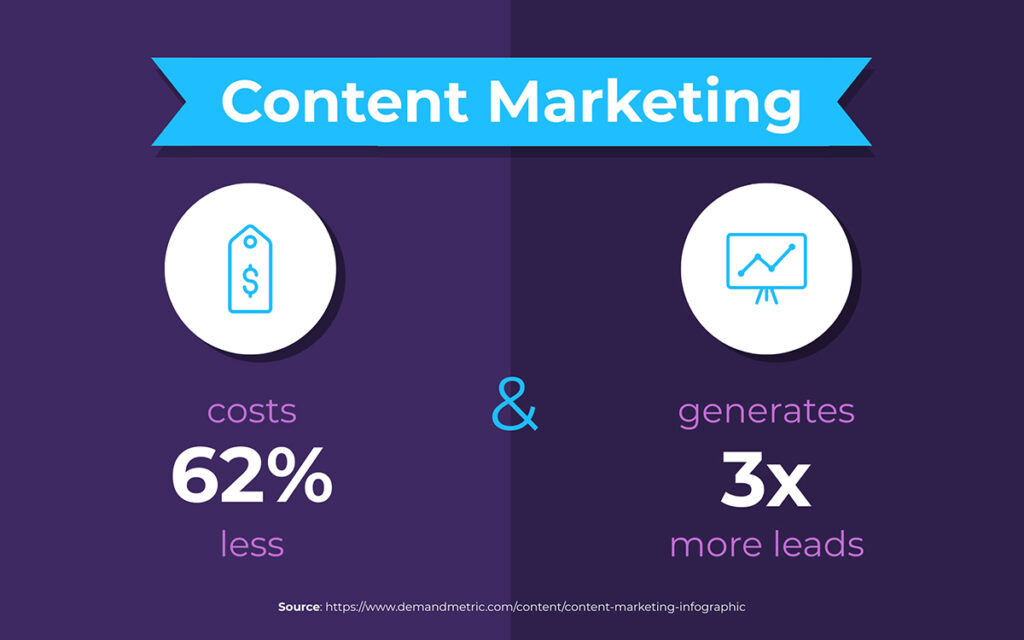
When compared to traditional advertising methods, a study from Demand Metric found that content marketing costs 62% less, and also generates 3x more leads than traditional advertising. Content marketing is one of the most effective forms of marketing at any scale, as well as being one of the most cost-effective.
Benefits of Content Marketing
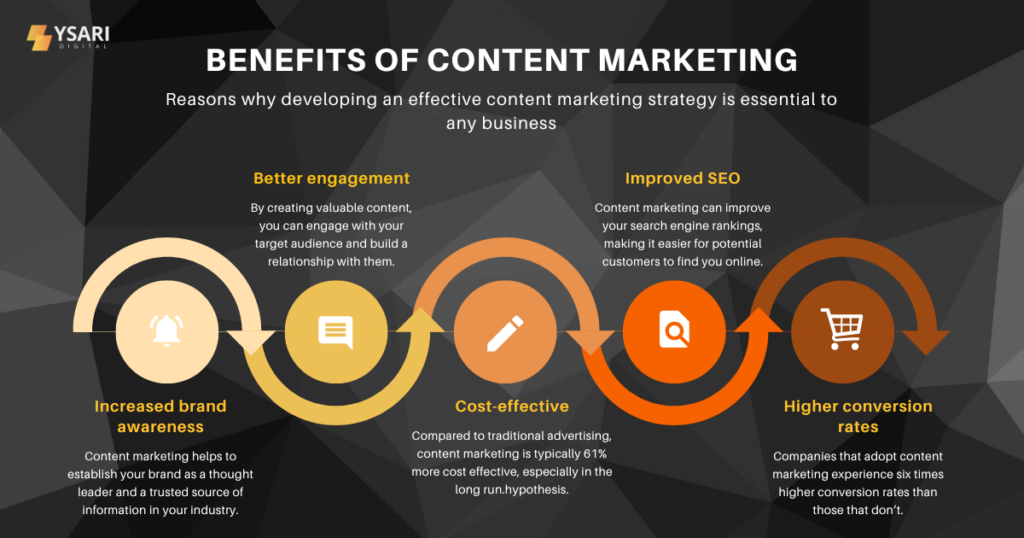
Content marketing has become an essential tool in online marketing. As the old adage says, “content is king,” — and content can make or break your online business. These are some of the reasons why developing an effective content marketing strategy is essential to any business, large or small:
Increased brand awareness:
Content marketing helps to establish your brand as a thought leader and a trusted source of information in your industry.
Better engagement:
By creating valuable content, you can engage with your target audience and build a relationship with them.
Improved SEO:
Content marketing can improve your search engine rankings, making it easier for potential customers to find you online.
Cost-effective:
Compared to traditional advertising, content marketing is typically 61% more cost effective, especially in the long run.
Higher conversion rates:
According to a study by Aberdeen, companies that adopt content marketing experience six times higher conversion rates than those who don’t.
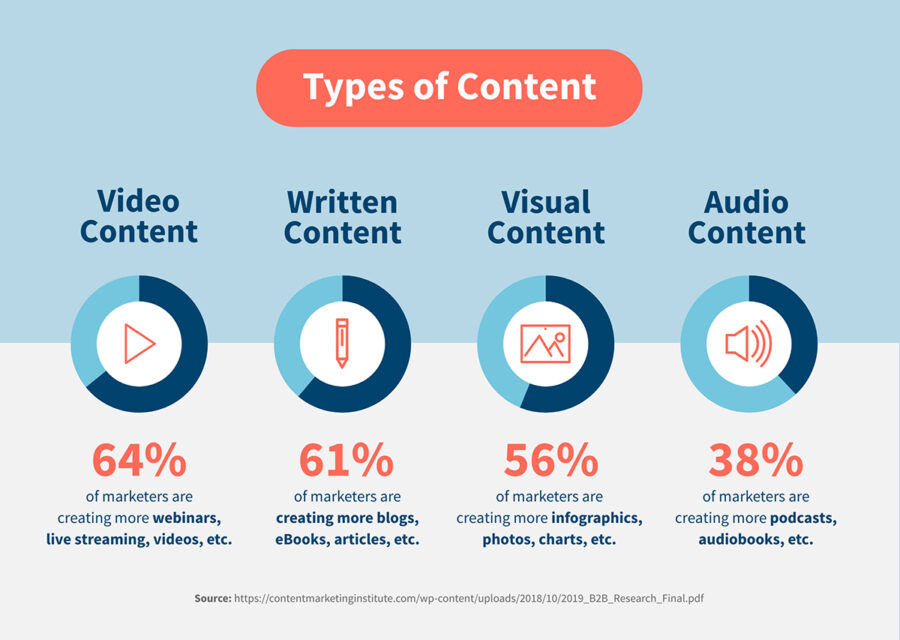
Types of Content Marketing
Blog posts: Blogging is one of the most common forms of content marketing. It involves creating informative and engaging blog posts on your website.
Videos: Videos are a powerful way to communicate your message to your audience. They can be used for product demos, explainer videos, or interviews.
Infographics: Infographics are visual representations of data or information. They are an effective way to convey complex information in an easy-to-understand format.
E-books: E-books are longer-form content that provide in-depth information on a specific topic. They can be used to generate leads or educate your audience.
Podcasts: Podcasts are audio recordings that can be downloaded or streamed online. They are a great way to build a relationship with your audience and establish your brand as an authority in your industry.
Creating a Content Marketing Strategy
Now, let’s define the necessary steps that you should follow when curating your own content marketing campaign. To get the most out of your content marketing efforts, it’s important to follow these steps:
Setting your goals:
Before you start, ask yourself, “what do I want to accomplish with my content marketing campaign?” Asking yourself this before you begin will be the foundation that your campaign is built upon. Goals can be things like increasing website traffic, generating leads, boosting sales, etc. Having your goals properly defined will allow you to move forward with confidence.
Define your Target Audience
Before you can even start creating content, you must define your target audience. Researching and understanding your target audience’s needs and interests is the first step behind any content marketing strategy. Once you have defined the people and things you need to target, you can then go on and create specific content that appeals and resonates with them.
Choose your content types:
Once you know what you want to accomplish and who you need to target, the next step would be choosing what kind of content you want to put out there. The previous two steps will allow you to effectively plan out the best type of content that fits your goals and audience. Refer to the previous section to learn more about the different content types.
Be consistent:
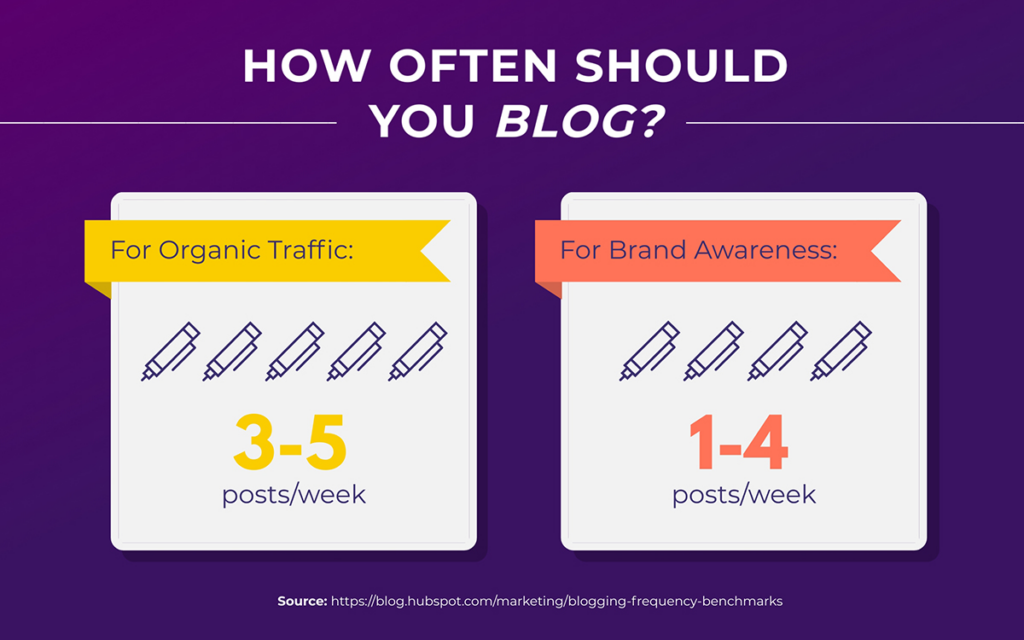
Consistency is key. When it comes to content marketing, being consistent will allow your site to constantly push relevant and interesting content out to your target audience. The interests and needs of people are always evolving along with whatever is going on in society, so creating a content calendar and sticking to it will keep your business on top of what’s relevant today.
Focus on quality:
Quality, informative, engaging. This is what you should strive for in your content. Remember, this content is representing YOUR brand. If you put out poor quality content, well, let’s just say your putting your company in a bad light. For many consumers, your content is the first impression of your brand, so make sure your content is good enough to leave a lasting impression.
Promote your content:
Creating great content is only the first step. Don’t just create content hoping people will find it on their own. You need to put your content where your target audience will see it. You need to promote it on various channels, places like social media, email marketing, paid advertising, etc. You want to be able to reach as many people as possible, and by utilizing multiple channels not only does it help you reach a wider audience, it also builds trust and credibility, both of which will help you drive more traffic and sales.
Measure Your Results:
After all of these steps, it’s important to take a step back to track and measure how your content marketing campaign performs. Actively working with your campaign will help you identify what’s working, and what’s not. From there you and your team should make adjustments to your campaign accordingly.
In order to measure the results of your campaign, you can track things like website traffic, engagement, conversion rates, and retention rates.
Content Marketing Trends to Watch
This field is always evolving, which means that there are always gonna be new and improved ways to get your brand out there. Here are some content marketing trends to watch in 2023.
Interactive content:
Interactive content has become increasingly popular in recent years. Nowadays, over half of marketers are utilizing interactive content in their campaigns. Using things such as quizzes and surveys help to make the content feel more personalized to the consumer and their needs.

User-generated content:
Adding user-generated content like customer reviews and social media posts to your campaign is becoming more popular in campaigns. Adding these things help to add authenticity and social proof to your brand’s message.
Video content:
Video content remains to be a very popular form of content marketing. For consumers, it is one of the most popular formats for consuming information, making it a good target area for businesses. Check out this graphic to see what marketers are saying about video content based marketing:

Content Marketing Examples
If you want to have a look at some successful content marketing campaigns from big companies, here are some that you should check out. Looking at successful examples can help inspire ideas for your own campaign.
Red Bull
Red Bull has a content hub called Red Bull Media House that produces content related to extreme sports and adventure. The brand uses this content to engage with its audience and build a community around its brand
HubSpot
HubSpot is a marketing software company that produces a range of content, including blog posts, e-books, and webinars, to educate its audience and generate leads. Check out there Resources section to get some ideas of what they do.
American Express
American Express has a content hub called OPEN Forum that provides small business owners with information and resources to help them grow their businesses.
Conclusion
Content marketing is a constantly evolving field, but by understanding your audience, creating high-quality content, and measuring your results, you can establish your brand as a thought leader and drive business results. With the right strategy and execution, content marketing can be a powerful tool for any business looking to build relationships with their audience and achieve their marketing goals.
FAQ
What is the difference between content marketing and traditional advertising?
Content marketing is more focused on building a relationship with a clearly defined audience by providing valuable information. In contrast, traditional advertising focuses on selling a product or service to as many people as possible through paid media channels.
What metrics should I track to measure the success of my content marketing efforts?
Be sure to track metrics such as website traffic, engagement, conversion rates, and retention rates. By paying attention to these things, you will be able to know whether or not your content marketing campaign is successful or not.
Content marketing does require some creativity. Try putting yourself in the shoes of your target audience, and think to yourself what would be effective on you if you were the consumer. Look at things like keyword research and what your competitors are doing in order to get some inspiration.
Can content marketing work for small businesses?
Yes, content marketing can be an effective strategy for small businesses with limited budgets. Because of the nature of it, many small businesses benefit greatly from utilizing content marketing, as it is more cost-effective and efficient that traditional adversiting.