
Social Media Marketing: A Comprehensive Guide
What is Social Media Marketing (SSM)?
Today, social media has become a huge part of all of our lives. With billions of people using social media platforms every day, it has become a crucial tool for businesses to connect with their customers and build their brand. Social media marketing (SMM) is the process of using social media platforms to promote products, services, or content. In this article, we will discuss everything you need to know about social media marketing, from understanding its importance to creating a successful SMM strategy.
Definition of Social Media Marketing
Social media marketing is the process of promoting products, services, or content through social media platforms such as Facebook, Instagram, Twitter, LinkedIn, and YouTube. The primary goal of social media marketing is to engage with your target audience and build a strong relationship with them. By doing so, you can increase brand awareness, drive traffic to your website, and ultimately generate more leads and sales.
The Importance of Social Media Marketing
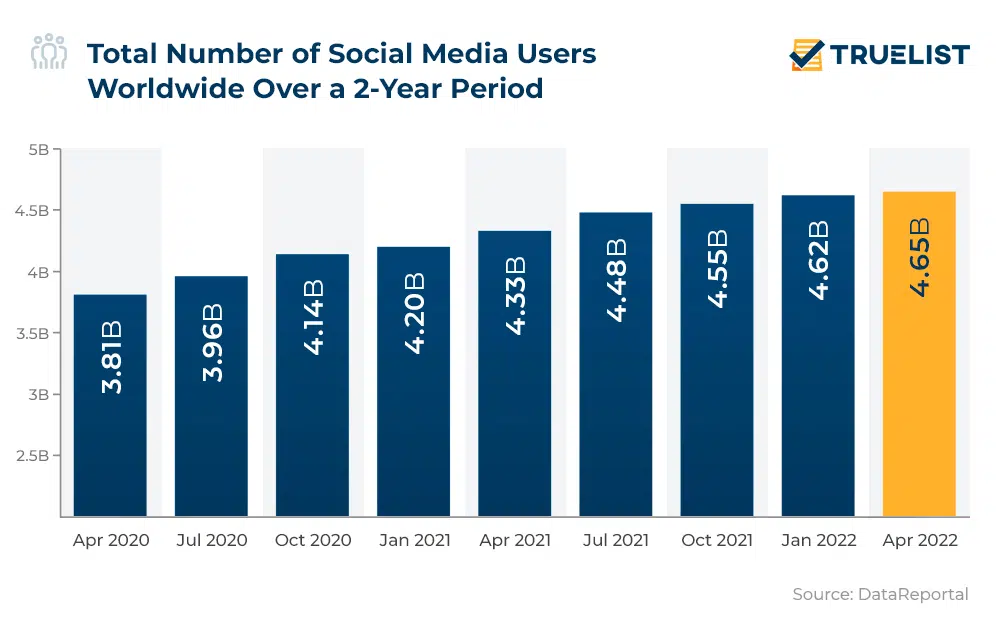
Social media marketing is an essential aspect of digital marketing. Social media platforms provide businesses with a cost-effective way to reach their target audience, build brand awareness, and engage with their customers. According to a recent survey, more than 70% of businesses use social media as a marketing tool, and more than 90% of marketers claim that social media marketing has increased their brand exposure. Along with Social Media having close to 5 billion users, the market is too big for companies to just ignore.
Benefits of Social Media Marketing
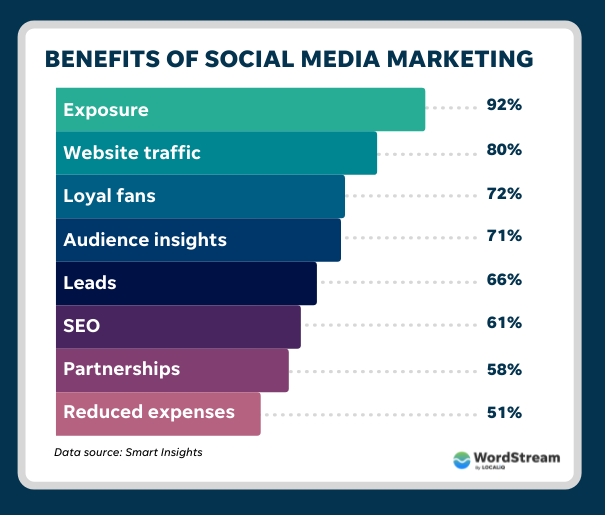
Increased brand awareness: Social media platforms allow businesses to reach a broad audience and increase their brand visibility. By creating engaging content and sharing it on social media, businesses can generate more brand awareness and recognition.
Increased website traffic: Social media can drive traffic to your website by sharing links to your website in your posts. By including calls-to-action, businesses can encourage their audience to visit their website, increasing their website traffic.
Improved customer engagement: Social media allows businesses to engage with their audience in real-time. By responding to comments and messages promptly, businesses can build a strong relationship with their audience and improve customer satisfaction.
Cost-effective: Social media marketing is a cost-effective way to reach your target audience. Unlike traditional advertising methods, social media platforms allow businesses to reach a broad audience at a lower cost.
Improved search engine rankings: Social media activity can improve your website’s search engine rankings. By sharing links to your website on social media, you can increase your website’s visibility and drive more traffic to your website.
Audience targeting: Social media platforms offer advanced audience targeting options. By targeting your audience based on demographics, interests, and behaviors, businesses can reach their ideal customer and improve their marketing efforts.
Increased sales and revenue: By building a strong relationship with their audience, businesses can generate more leads and sales through social media marketing. By promoting their products or services on social media, businesses can increase their revenue and improve their bottom line.
Getting Started With Social Media Marketing
We’ll go through the steps of starting a successful social media campaign for your business. Before going into it, you want to define things like your goals, the right platforms for your business, and what you would like to get out of social media.
Defining your target audience:
One of the most critical aspects of social media marketing is understanding your target audience. You need to know who your customers are, what their interests are, and what motivates them. By understanding your target audience, you can create content that resonates with them, and engage with them in a way that is meaningful and relevant.
Setting your goals:
To create a successful social media marketing campaign, you need to set specific and measurable goals. Your goals could be to increase brand awareness, drive traffic to your website, generate more leads, or increase sales. By setting clear goals, you can measure the success of your campaign and make necessary adjustments to achieve your objectives.
Choosing the right social media platforms:
There are numerous social media platforms available, and it is essential to choose the ones that are most relevant to your business. Each platform has its unique audience, features, and advantages. For example, if your business targets a younger audience, Instagram and Snapchat might be more suitable than LinkedIn. By choosing the right social media platforms, you can reach your target audience more effectively and efficiently.
After you have laid the foundation of your social media marketing strategy by going through these three phases, it’s time to get going.
Creating an Engaging Social Media Campaign
After you have laid the foundation of your social media marketing strategy by going through the three phases listed in the previous section, it’s time to get going with creating engaging content that captures your audience’s attention.
Use high-quality visuals: Visuals are more engaging than text alone. Providing your target audience with high-quality images, videos, and graphics will make your content more appealing to your target audience, helping to leave a positive and lasting impression with them.
Tell a story: People love stories. Use storytelling to create a connection with your audience. Every business on social media should be striving to build a connection with their target audience, as it builds both trust and credibility.
Brand Identity: Think about how you want your brand to be perceived. How your brand is perceived can play an instrumental role in gaining and retaining potential customers. This works hand-in-hand with telling a story, as a majority of people are much more likely to do business with a brand that they feel a connection with.
Keep it brief: Social media platforms have limited space for text. Keep your content concise and to the point. You don’t want to come off as overly-wordy or indecisive about your message, so it is best to keep it brief.
Use humor: Humor is an excellent way to engage with your audience and make your brand more relatable. Having a sense of humor humanizes your brand, and can help you to build relationships with your customers, which in-turn builds trust and commitment.
Stay Consistent: Social media platforms often reward consistent and quality profiles. You don’t wanna post a graphic here and there and be ghost for weeks in between. Not only is it unfavorable to the algorithms, but it also is a bad look for your business.
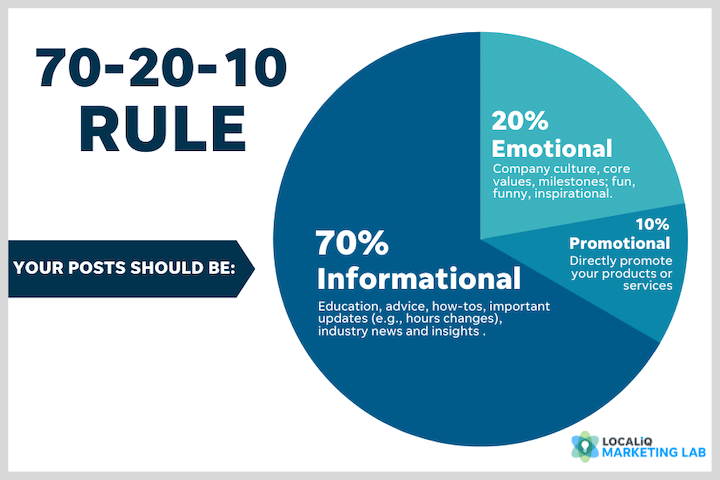
Inbound Approach: You should be using social media to mostly build your brand, and not as a place to pitch your brand. Although it is good to promote a little, people prefer it if you provide them with quality and interesting content. Here is a general rule of thumb, the 70-20-10 rule:
Measuring the Success of Your Social Media Marketing Campaign
Measuring the success of your social media marketing campaign is crucial to know if you are achieving your goals. You can use metrics such as engagement rate, reach, and conversion rate to track your progress. Use social media analytics tools to measure the effectiveness of your campaign and make necessary adjustments to achieve your goals.
It’s important to note that building up your brands social media takes both time and dedication. Staying on top of your campaign even when results aren’t instant is very important to social media marketing.

Social Media Advertising
Social media advertising is an effective way to reach a broader audience and promote your brand. You can use social media platforms’ advertising features to target specific demographics, interests, and behaviors. Social media advertising allows you to reach your target audience more effectively than traditional advertising methods. Social media platforms offer a variety of advertising options, including:
Facebook Ads: Facebook Ads allow businesses to create targeted ads based on demographics, interests, and behaviors. Businesses can create image, video, and carousel ads to promote their products or services.
Instagram Ads: Instagram Ads allow businesses to create targeted ads that appear in users’ feeds or stories. Businesses can create image, video, and carousel ads to promote their products or services.
Twitter Ads: Twitter Ads allow businesses to create promoted tweets, promoted accounts, and promoted trends to reach their target audience.
LinkedIn Ads: LinkedIn Ads allow businesses to create sponsored content, sponsored InMail, and display ads to reach their target audience on the professional networking platform.
Social media advertising can be a cost-effective way to reach a specific audience and promote your products or services. By creating targeted ads and monitoring their performance, businesses can improve their advertising efforts and generate more leads and sales.
It’s important to note that social media advertising can be complex, and businesses may need to work with a social media advertising agency or consultant to develop and implement their advertising strategy effectively.
Influencer marketing:
Influencer marketing is a popular social media marketing strategy that involves collaborating with influencers to promote your brand. Influencers are individuals with a significant social media following and influence in their respective niche. Influencer marketing allows you to leverage an influencer’s audience to promote your brand and reach a broader audience.
Social Media Marketing Tools & Resources
There are numerous social media marketing tools and resources available to help you create and manage your social media marketing campaign. Some of the popular tools include Hootsuite, Buffer, Sprout Social, and Canva. These tools can help you automate your social media posting, track your analytics, and create engaging visual content.
Managing Your Social Media Presence:
Managing your social media presence is crucial to maintain a positive image and reputation. You should respond to comments and messages promptly, address customer concerns, and engage with your audience. Use social media management tools to schedule posts, monitor mentions, and track your brand’s online reputation.
Common Social Media Marketing Mistakes to Avoid
While social media marketing can be a valuable tool for businesses, it’s important to avoid common mistakes that can harm your efforts. Here are some of the most common social media marketing mistakes to avoid:
Failing to have a strategy: Without a clear strategy in place, your social media marketing efforts may be disorganized and ineffective. It’s important to set clear goals and develop a strategy for how you will achieve them.
Posting too much or too little: Posting too much can overwhelm your audience and cause them to unfollow you, while posting too little can cause your audience to lose interest. It’s important to find a balance and develop a consistent posting schedule.
Ignoring negative feedback: Ignoring negative feedback on social media can harm your reputation and cause your audience to lose trust in your brand. It’s important to respond promptly and professionally to negative feedback and address any issues.
Focusing solely on promotion: Social media marketing is about building relationships with your audience, not just promoting your products or services. It’s important to create engaging content that provides value to your audience and encourages them to engage with your brand.
Using too many hashtags: While hashtags can be a valuable tool for increasing your reach on social media, using too many hashtags can make your content appear spammy and harm your credibility. It’s important to use hashtags strategically and sparingly.
Not monitoring your performance: Without monitoring your performance, you won’t know what’s working and what’s not. It’s important to track your engagement, reach, and other metrics and adjust your strategy accordingly.
By avoiding these common social media marketing mistakes, businesses can improve their efforts and achieve better results on social media.
Conclusion
Social media marketing is an essential aspect of digital marketing. By creating a successful social media marketing campaign, you can build a strong relationship with your target audience, increase brand awareness, and ultimately generate more leads and sales. To create a successful SMM strategy, you need to understand your target audience, set clear goals, choose the right social media platforms, create engaging content, and measure your success.
The future of social media marketing looks promising. With the rise of new social media platforms and technologies, businesses have more opportunities to reach their target audience and promote their brand. Social media marketing will continue to evolve, and businesses that keep up with the latest trends and technologies will have a competitive advantage.