What is SEO? An In-Depth Look at Search Engine Optimization
Search Engine Optimization (SEO) is a crucial component of digital marketing. It involves the process of optimizing websites, content, and other digital assets to rank higher in search engines such as Google, Bing, and Yahoo. SEO helps businesses to attract more organic traffic to their website, which in turn increases the likelihood of generating more leads and sales. In this article, we will discuss the basics of SEO, including its importance, how it works, and some best practices to follow for effective SEO.
In this article, we will take a detailed look at SEO, explaining what it is, how it works, and why it is so important for online success. We will explore the different components of SEO, including on-page optimization, off-page optimization, technical SEO, and local SEO, and we will provide tips and strategies for improving your search engine rankings and driving traffic to your website.
Why is SEO so important?
SEO is an essential tool for any business on the web that wants to succeed online. In today’s digital age, consumers are increasingly using search engines to find information, products, and services. By ranking higher in search engine results pages (SERPs), businesses can increase their visibility to potential customers and drive more traffic to their website.
Higher rankings in search engines also increase credibility and trust among potential customers. Consumers tend to trust search engines to deliver the most relevant and authoritative results for their search queries. Therefore, if a business appears at the top of search engine results pages, it is perceived to be a more trustworthy and reputable source than those that appear lower down the page.
How Search Engines Optimization Work
Optimizing your website for search engines is complex. It’s a process that is always evolving and changing. The main goal of SEO is to make websites and content more accessible and understandable to search engines. In order to accomplish this, it involves optimizing various factors both on and off your page that search engines consider when ranking websites.
On-page factors refer to things on the website itself that can be optimized, such as header tags, meta descriptions, title tags, content, images, and internal linking. Off-page factors are more external factors that can impact website rankings, things like backlinks, social media signals, and online reviews.
A critical part of SEO is keyword research. It’s used to identify the search terms and phrases that potential customers are using in search engines to find information related to the business. By actively incorporating these keywords into website content, businesses can increase the likelihood of appearing in search results when users search for those terms. Keyword research also helps to increase the reach of your site, by having more diverse keywords it allows your website to appear in many potential areas around the web.
Understanding SEO
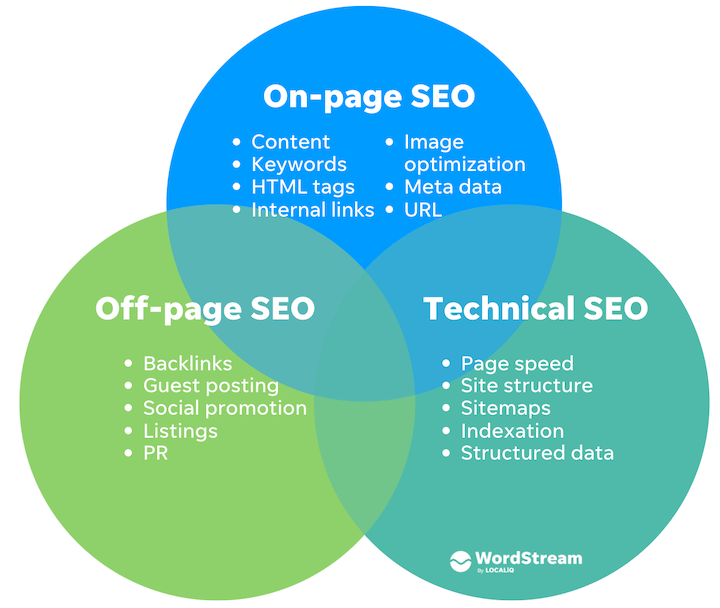
There are several SEO techniques that website owners and SEO professionals use to optimize websites for search engines. These techniques can be broadly categorized into three types: on-page SEO, off-page SEO, and technical SEO.
On-Page SEO
On-page SEO refers to optimizing the content and structure of a website’s individual web pages to make them more relevant and user-friendly. This includes optimizing the title tags, meta descriptions, headings, URLs, and images on web pages. Keyword research and optimization, creating high-quality and engaging content, and improving the website’s internal linking structure are also crucial aspects of on-page SEO.
Off-Page SEO
Off-page SEO involves optimizing factors outside the website that can impact its search engine rankings. This includes building high-quality and relevant backlinks from other websites, social media marketing, online reputation management, and influencer marketing. Off-page SEO helps in establishing the website’s authority and credibility in the online world.
Technical SEO
Technical SEO involves making changes to a website’s structure and code to improve its performance and usability. This may include improving site speed, implementing schema markup, optimizing for mobile devices, and ensuring that the site is crawlable and indexable by search engines.
Local SEO
Local SEO should be a high priority focus for any local based business. Local SEO involves optimizing a website’s content and structure to improve its visibility and relevance for local search queries. This may include optimizing for local keywords, building local citations and backlinks, and ensuring that the site is listed and verified on local directories and search engines.
Best Practices for effective SEO
Now, let’s take a deeper dive into what really is going on in SEO. Keyword research, content creation, link building, are all an integral part of how Google ranks your site. Google ranks your site using E-A-T = Expertise, Authoritativeness, and Trustworthiness. We’ll dive into how to attain these things throughout the rest of this article.
Keyword Research
Keyword research is a critical step in SEO as it involves identifying the keywords and phrases that users search for on search engines related to a website’s content or services. Keyword research helps in understanding user intent and behavior, and optimizing website content to align with those keywords. Tools like Google Keyword Planner, SEMrush, and Ahrefs are commonly used for keyword research.
Content Creation and Optimization
Creating high-quality, engaging, and relevant content is a crucial aspect of SEO. Content optimization involves optimizing the website’s content with the identified keywords and ensuring it is well-structured, easy to read, and provides value to users. Content can include various forms such as blog posts, articles, videos, infographics, and more. Content creation and optimization help in improving a website’s relevance, authority, and user experience.
Optimizing On-Page Elements
Optimizing on-page elements such as title tags, meta descriptions, header tags, content, images, and internal linking is crucial for effective SEO. These elements help search engines to understand what the website is about and how relevant it is to users’ search queries.
Building Quality Backlinks
Backlinks are external links that point to the website from other websites. Quality backlinks from authoritative and relevant sources can significantly improve website rankings. However, businesses should focus on building quality backlinks rather than just quantity.
Monitoring and Tracking Performance
Monitoring and tracking the performance of SEO campaigns is crucial for identifying areas of improvement and ensuring that SEO efforts are aligned with business goals. Regular tracking and reporting can help businesses to make informed decisions and adjust their SEO strategies accordingly.
SEO Tools
There are several SEO tools available that can assist website owners and SEO professionals in optimizing their websites. These tools provide insights and data related to website performance, keywords, backlinks, and more. Some popular SEO tools include Google Analytics, Google Search Console, SEMrush, Ahrefs, Moz, and Yoast SEO plugin for WordPress.
Conclusion
SEO is a critical component of digital marketing that helps businesses to increase their online visibility, attract more organic traffic, and generate more leads and sales. By following best practices such as conducting keyword research, creating quality content, optimizing on-page elements, building quality backlinks, and monitoring and tracking performance, businesses can achieve effective SEO and reap the benefits of higher rankings
FAQ
What is the importance of SEO for a website’s visibility?
SEO is important for a website’s visibility as it helps in improving its rankings on search engine results pages (SERPs), resulting in increased organic traffic and potential conversions.
What are some common on-page SEO techniques?
Common on-page SEO techniques include optimizing title tags, meta descriptions, headings, URLs, and images, conducting keyword research, creating high-quality content, and improving internal linking structure.
How does link-building impact SEO
Link building helps in improving a website’s authority and credibility by obtaining high-quality backlinks from other websites, which can result in higher rankings on search engine results.
Yes, social media can impact SEO indirectly by driving traffic to the website, increasing brand awareness, and